
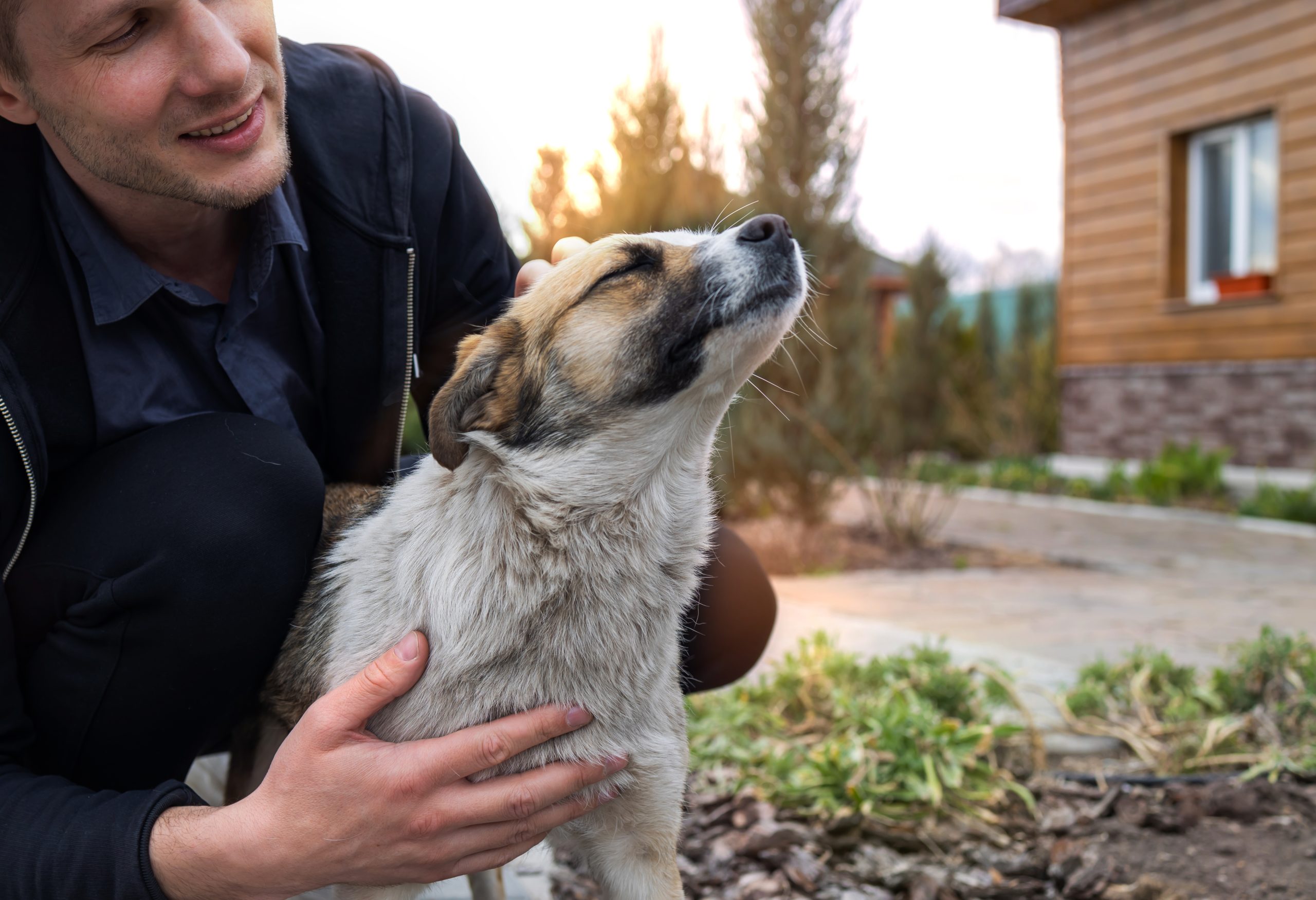
Rocky didn’t trust anyone when he arrived at his new home. He was sarcastic, guarded, and convinced that “forever” was just a word people used right before they gave up on you. By the end of his story, he was crying happy tears and admitting he was starting to understand love.
If you’ve ever looked at your own dog and wondered, “does my dog actually trust me, or do they just tolerate me?”, you’re not alone. Trust and love aren’t quite the same thing for dogs, and neither one shows up as a single obvious moment. It builds quietly, through small, repeated signals.
Here are eight real signs that a dog trusts you, plus what to do if you’re not seeing them yet.
Key Takeaways
- Trust shows up in body language and daily habits, not one big moment.
- A trusting dog seeks you out and relaxes around you, even in new situations.
- Fear and trust can exist at the same time. One doesn’t cancel out the other.
- Trust is built through patience and consistency, not a single fix.
What Trust Actually Looks Like in Dogs
Trust and love get used interchangeably, but they’re not identical. There’s a lot of overlap between signs your dog loves you, signs your dog is happy with you, and signs your dog trusts you specifically, since they all stem from the same underlying sense of safety. But a dog can love you and still not fully trust new situations, and a dog can trust you deeply while still working through fear from their past.
Rocky is a good example. Even after he started to trust his new family, he still flinched at loud noises and tested the fence at the edge of the yard. Trust wasn’t a finish line he crossed once. It was something that kept building, a little more every day. That’s worth understanding early, because dog anxiety vs. trust isn’t an either/or question. A dog can be anxious about one thing and still trust you completely.
Here’s how dogs actually show trust.
8 Signs Your Dog Trusts You
1. They Choose to Be Near You
Rocky starts the story lying alone on his blanket, as far from human affection as possible. That’s not unusual for a dog carrying old wounds.
One of the clearest signs a dog trusts you is when they start choosing you. They follow you from room to room. They settle near your feet instead of retreating to a corner. Nobody’s making them do this. This kind of freely-chosen closeness is really the foundation of the dog-owner bond.
2. Their Body Language Softens
A guarded dog carries tension in their whole body: stiff shoulders, a low or tucked tail, ears pinned back, a posture that’s ready to move away at any second.
As trust grows, that tension eases. The tail lifts. The ears loosen. The whole dog looks, for lack of a better word, floppier. These are dog affection signals your dog is showing you constantly. Most owners just haven’t learned to read them yet.
3. They Make Calm, Soft Eye Contact
Understanding dog eye contact meaning starts with knowing that dogs read it very differently than wolves do. Wolves treat a direct stare as a threat. Dogs, after thousands of years living alongside us, learned to use eye contact as a bonding tool instead.
Research has shown that mutual gaze between dogs and their people triggers a release of oxytocin, the same hormone involved in the bond between a parent and a newborn, in both species. A dog who holds your gaze with soft, relaxed eyes (not a hard stare) is telling you they feel safe.
4. They Sleep Deeply Around You
How a dog sleeps says a lot about how safe they feel. A dog who’s still on alert will sleep lightly, ears twitching at every sound, ready to jump up. A dog who trusts you will sleep on their side, their back, or curled up close to you, fully checked out.
The meaning behind dog sleeping positions is one of the most honest signals we get from our dogs, mostly because they aren’t performing for anyone while they’re asleep.
5. They Initiate Play
Play only happens when a dog’s nervous system has settled enough to relax. A stressed or fearful dog isn’t thinking about tug-of-war. They’re thinking about survival.
When your dog brings you a toy, drops into a play bow, or starts a game of chase on their own, that’s a strong sign of trust. It’s also a good marker of dog socialization and confidence more broadly. Dogs who feel secure with their people tend to be more playful and outgoing in general, not just with you but with the world around them.
6. They Accept Handling Calmly
Dottie fought her first bath. Weeks later, she stood still while her fur was combed and a scarf was tied around her neck, calm the whole time.
Nail trims, brushing, vet visits, even a hug from an over-enthusiastic kid: none of these are naturally comfortable for a dog. A dog who tolerates this kind of handling without flinching, growling, or trying to escape is showing you real trust. It’s one of the clearest signs your dog feels safe with you, because it holds up under mildly uncomfortable circumstances, not just easy, fun ones.
7. They Come to You When Scared
Loud noises. Strangers. A strange new object in the yard. When something spooks a fearful dog, they usually freeze, flee, or fight.
A dog who trusts you does something different: they come to you. Rocky, Dottie, and just about every dog with a strong bond to their person will use that person as a safe base when the world feels unpredictable. If your dog presses against your leg or climbs into your lap during a thunderstorm, that’s not neediness. That’s trust in action.
8. They Let Themselves Show Emotion
Rocky’s most vulnerable moment in the story is admitting that “water has come out of my eyes” since arriving at his new home, what he later calls “happy water.” That kind of openness doesn’t come easily to a guarded dog.
Dogs who’ve learned to protect themselves often shut down emotionally as a defense. When a dog lets you see them whine, lean in for comfort, or get visibly excited without holding back, they’ve decided they don’t need to guard themselves around you anymore.
Signs Your Dog Doesn’t Trust You Yet
Not every dog shows all eight signs right away, and that’s completely normal, especially with a rescue. These are sometimes mistaken for signs that your dog doesn’t like you, but that’s rarely what’s actually going on. More often, it just means they’re not there yet:
- Avoiding eye contact or looking away quickly
- Flinching or ducking away when you reach toward them
- Staying stiff or frozen during handling
- Hiding or retreating when you approach
- Refusing food or treats from your hand
None of these mean your dog doesn’t like you. They usually mean your dog needs more time, more predictability, and more patient repetition before trust can take root.
How to Build (or Rebuild) Trust With Your Dog
If you’re not seeing many of these signs yet, don’t worry. Trust isn’t something you can rush, but there’s a lot you can do to help it along. These same steps work whether you’re figuring out how to gain a dog’s trust from scratch with a new rescue, or working on how to make your dog like you a little more after a rocky start.
- Let them set the pace. Don’t force interactions, especially with a fearful or newly adopted dog. Let them approach you first.
- Use positive reinforcement. Reward-based training builds confidence instead of fear. Punishment-based methods do the opposite: they teach a dog to fear you, not trust you.
- Keep your routine predictable. Consistent feeding times, walks, and daily structure help an anxious dog relax, because they always know what’s coming next.
- Learn their body language. Reading the subtle signals your dog gives off, like lip licking, yawning, or a stiff tail, helps you avoid pushing them past their comfort zone before they’re ready.
- Give them a safe space. A crate, a bed, or a quiet corner that’s entirely theirs gives a stressed dog somewhere to decompress without pressure. It’s one of the simplest, most effective tools for relaxing a fearful dog over time.
This is exactly the kind of patient, day-by-day process Rocky and Dottie go through in Rocky’s Forever Home, and it mirrors the real process real adopters go through with real dogs while building a strong bond with your dog. If you’re in the middle of that adjustment period yourself, our post on how rescue dogs adjust from the streets to a real home walks through what to expect, week by week.
FAQs
How can you tell if your dog trusts you?
Look for a pattern, not a single moment. A dog that trusts you will seek you out, relax their body around you, sleep soundly nearby, and stay calm during handling. One sign alone isn’t proof either way, but several together are a strong indicator.
What behaviors show dog trust?
The clearest behaviors are soft eye contact, a relaxed body, calm sleep positions, willingness to play, and staying calm during grooming or vet visits. Dogs also show trust by coming to you for comfort when they’re scared, rather than hiding or bolting.
Can a dog trust someone it fears?
Not the specific thing they’re afraid of, but yes, a dog can trust you while still being afraid of something else entirely, like thunderstorms or strangers. Fear and trust can coexist as long as the fear isn’t directed at you. Behavior specialists who work with severely fearful rescue dogs see this constantly: a dog can be visibly frightened of the world and still lean on the one person who’s shown them consistent safety.
Is a dog following me everywhere always a sign of trust?
Not always. Sometimes it’s trust, and sometimes it’s separation anxiety. The difference is how your dog acts when you leave the room. A trusting dog can settle on their own; an anxious dog tends to pace, whine, or panic.
The Bottom Line
Trust with a dog, especially a rescue dog, isn’t built in one big gesture. It’s built in a hundred small ones: a soft glance, a relaxed nap, a toy dropped at your feet. Rocky and Dottie needed patience, consistency, and time before they believed their new home was really “forever.” Most dogs need the same thing from us.
If Rocky’s story resonated with you, you can read more about Rocky’s Forever Home here or explore what it really means to give a dog a forever home.
About This Blog
Inspired by Rocky’s emotional journey in Rocky’s Forever Home. Share this with adopters who need a little encouragement. The transformation is coming.
